Financial Literacy Education in US K-12: 4 Curriculum Models for 2026
Financial literacy education in US K-12 schools is crucial for equipping students with essential money management skills, with four prominent curriculum models guiding implementation by 2026.
Have you ever wondered if young Americans are truly prepared for the financial complexities of adulthood? The imperative for robust financial literacy education in US K-12 schools is clearer than ever, with 2026 poised to be a pivotal year for curriculum adoption and impact. This article delves into why this education is vital and explores four leading curriculum models shaping its future.
The Growing Need for Financial Literacy in Early Education
In an increasingly complex economic landscape, the foundational skills of financial literacy are no longer a luxury but a necessity. Students exiting the K-12 system often face significant financial decisions, from college loans and credit cards to budgeting and saving. Without proper guidance, these decisions can lead to long-term financial instability.
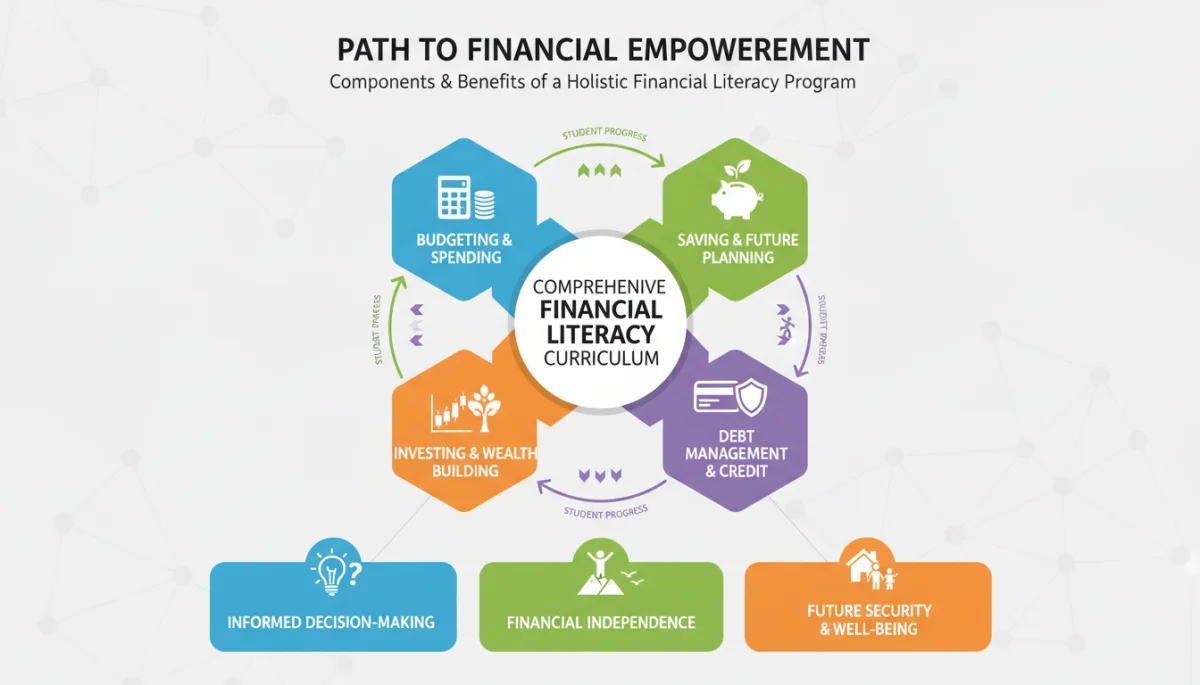
Integrating financial education early helps cultivate responsible habits and informed decision-making. By introducing concepts like saving, spending, and debt management at an age when habits are formed, schools can empower students to build a secure financial future. This proactive approach aims to reduce future financial distress and foster economic resilience.
Economic Realities and Youth Preparedness
- Rising Debt: Student loan debt and credit card usage among young adults continue to be major concerns, highlighting a gap in understanding financial obligations.
- Complex Markets: The digital age brings new financial products and services, requiring a sophisticated understanding of online banking, cryptocurrencies, and investment platforms.
- Economic Volatility: Recent global events have underscored the importance of emergency savings and financial planning for unexpected challenges.
Ultimately, the goal is to move beyond theoretical knowledge to practical application. Financial literacy should not just be about definitions but about real-world scenarios and skills that students can immediately apply to their lives. This includes understanding the impact of their choices and developing strategies for financial well-being.
Benefits of Early Financial Education for Students and Society
Providing financial education from an early age offers a multitude of benefits that extend far beyond individual students. It contributes to a more financially stable and informed society, fostering economic growth and reducing reliance on social safety nets. When young people understand how to manage their money, they are better equipped to contribute positively to the economy.
Early exposure to financial concepts helps demystify money matters, making them less intimidating as students grow older. It builds confidence and critical thinking skills necessary for navigating a world filled with financial choices. This foundation is crucial for developing habits that lead to long-term financial health.
Individual Empowerment and Community Impact
- Improved Decision-Making: Students learn to evaluate financial choices, understand risks, and make informed decisions about spending, saving, and borrowing.
- Reduced Financial Stress: Greater financial understanding can alleviate anxiety related to money, leading to better mental and emotional well-being.
- Entrepreneurial Spirit: Financial literacy can inspire entrepreneurial endeavors by teaching students about business planning, investment, and market dynamics.
Moreover, financially literate individuals are less likely to fall victim to predatory lending practices or scams. They understand the importance of credit scores, interest rates, and investment diversification, protecting themselves and their assets. This collective knowledge strengthens the economic fabric of communities.
Model 1: Integrated Curriculum Approach
The integrated curriculum approach weaves financial literacy concepts into existing subjects rather than treating it as a standalone course. This model aims to demonstrate the real-world relevance of financial concepts by connecting them to mathematics, social studies, economics, and even language arts. For example, calculating interest rates in a math class or discussing the economic impact of historical events in social studies can naturally incorporate financial lessons.
This method allows for broader reach and avoids the challenge of carving out dedicated time in an already packed school day. By making financial concepts a natural part of various subjects, students are exposed to these ideas repeatedly and in different contexts, reinforcing their understanding and retention.
Implementation Strategies and Advantages
- Cross-Curricular Projects: Students might create a budget for a historical expedition in social studies or calculate the cost-effectiveness of different energy sources in science.
- Teacher Training: Educators from various disciplines receive training to identify and integrate financial literacy themes into their lessons effectively.
- Contextual Learning: Financial concepts become more relatable when applied to subjects students are already studying, making learning more engaging.
While the integrated approach offers significant advantages in terms of feasibility and contextual learning, it requires strong coordination among departments and ongoing professional development for teachers. Its success hinges on the ability of educators to confidently incorporate these topics into their daily instruction, ensuring a consistent and comprehensive learning experience across subjects.
Model 2: Standalone Course Requirement
Another prominent approach is the implementation of a standalone financial literacy course, typically mandated at the high school level. This model ensures that all students receive dedicated, in-depth instruction on a comprehensive range of financial topics. By creating a specific course, schools can guarantee a consistent curriculum and dedicated time for complex subjects like investing, taxes, and insurance.
A standalone course allows for specialized teachers who are experts in financial education, providing students with high-quality instruction. It also signals the importance of financial literacy as a core life skill, comparable to other essential academic subjects. This concentrated focus can lead to a deeper understanding and better retention of financial principles.
Curriculum Depth and Dedicated Resources
- Comprehensive Coverage: Topics often include budgeting, saving, debt management, credit scores, investing fundamentals, insurance, and understanding taxes.
- Specialized Instructors: Teachers with backgrounds in finance or economics can deliver more nuanced and practical lessons.
- Assessment and Accountability: A dedicated course allows for clear learning objectives and measurable outcomes, ensuring students meet specific financial literacy standards.
While a standalone course offers the benefit of focused instruction, it can present challenges in terms of scheduling and resource allocation. Schools must find space in an already crowded curriculum and ensure they have qualified personnel to teach the course. However, for many states, the benefits of ensuring every student receives this critical education outweigh these logistical hurdles.
Model 3: Online and Digital Learning Platforms
The rise of technology has paved the way for online and digital learning platforms as a viable model for delivering financial literacy education. These platforms offer flexibility, personalized learning paths, and access to a wealth of interactive resources. They can complement traditional classroom instruction or serve as primary delivery mechanisms, especially in schools with limited resources or rural areas.
Digital platforms often incorporate gamification, simulations, and real-world scenarios to make learning engaging and relevant. Students can progress at their own pace, revisit challenging topics, and receive immediate feedback. This adaptability makes online tools a powerful asset in reaching diverse learners and addressing varying learning styles.
Interactive Tools and Accessibility
- Gamified Learning: Financial simulations and games allow students to practice money management in a risk-free environment.
- Personalized Content: Adaptive platforms can tailor lessons to individual student needs and progress, ensuring mastery of concepts.
- Resource Accessibility: Online modules provide access to up-to-date financial information, tools, and expert content that might be otherwise unavailable.
Despite their advantages, digital platforms require reliable internet access and digital literacy skills from both students and educators. Ensuring equitable access and providing adequate technical support are key considerations for successful implementation. When properly integrated, these tools can significantly enhance the effectiveness and reach of financial literacy programs.
Model 4: Community Partnership Programs
Community partnership programs leverage the expertise and resources of local businesses, financial institutions, non-profits, and adult volunteers to deliver financial literacy education. This model brings real-world perspectives and practical experience into the classroom, enriching the learning experience beyond what traditional teaching alone can offer. Partnerships can take many forms, from guest speakers to mentorship programs and internships.
These collaborations provide students with invaluable insights into career paths in finance, entrepreneurship, and responsible money management from those actively working in these fields. Such programs not only educate but also inspire students, helping them see the tangible benefits of financial knowledge and planning.
Real-World Application and Mentorship
- Guest Speakers: Financial professionals share their experiences and advice on topics like budgeting, investing, and career planning.
- Mentorship Opportunities: Students can be paired with mentors from the financial sector for personalized guidance and career exploration.
- Workshops and Field Trips: Visits to banks or businesses provide practical context to financial concepts, demonstrating how they operate in the real world.
The success of community partnership programs relies on strong relationships between schools and local organizations. Effective coordination, clear objectives, and consistent engagement are crucial for maximizing their impact. These programs bridge the gap between academic learning and practical application, preparing students for the financial realities they will encounter after graduation.
Challenges and Opportunities for 2026 and Beyond
As we look towards 2026, the landscape of financial literacy education in US K-12 presents both significant challenges and exciting opportunities. One primary challenge is ensuring equitable access to quality financial education across all socio-economic backgrounds and school districts. Disparities in resources, teacher training, and curriculum adoption can create an uneven playing field for students.
Another hurdle involves keeping curriculum content current and relevant in a rapidly evolving financial world. New technologies, economic trends, and financial products emerge constantly, requiring educators to continuously update their knowledge and teaching materials. This demands ongoing investment in professional development and curriculum review processes.
Addressing Disparities and Evolving Content
- Funding and Resources: Securing adequate funding to support comprehensive financial literacy programs, particularly in underserved communities.
- Teacher Professional Development: Equipping educators with the knowledge and confidence to teach complex financial concepts effectively.
- Curriculum Adaptability: Developing flexible curricula that can be easily updated to reflect changes in the financial landscape and student needs.
Despite these challenges, the increasing recognition of financial literacy as a vital life skill creates significant opportunities. Growing advocacy from parents, educators, and policymakers is driving legislative changes and increased support for these programs. The availability of diverse curriculum models, from integrated approaches to digital platforms and community partnerships, offers schools flexibility in implementation. The focus now is on scaling these successes and ensuring every K-12 student in the US receives the financial education they deserve to thrive in adulthood.
| Key Curriculum Model | Brief Description |
|---|---|
| Integrated Approach | Weaves financial concepts into existing subjects like math and social studies, promoting contextual learning. |
| Standalone Course | Mandates a dedicated high school course for in-depth, comprehensive financial instruction by specialized teachers. |
| Online/Digital Platforms | Utilizes interactive online tools, gamification, and personalized learning for flexible and engaging education. |
| Community Partnerships | Engages local businesses and financial experts to provide real-world insights, mentorship, and practical experiences. |
Frequently Asked Questions About Financial Literacy Education
Financial literacy equips K-12 students with essential skills to manage money effectively, make informed financial decisions, and avoid common pitfalls like debt. It fosters economic independence and prepares them for real-world financial challenges after graduation.
An integrated curriculum seamlessly incorporates financial concepts into existing subjects, making learning more contextual and relevant. It ensures broader exposure to financial topics without requiring new dedicated courses, leveraging current educational structures.
Standalone courses provide dedicated, in-depth instruction on a wide range of financial topics, often taught by specialized educators. This model ensures comprehensive coverage and allows for focused assessment of student understanding in financial management.
Digital platforms offer flexible, interactive, and personalized learning experiences through gamification and simulations. They provide accessible resources, allowing students to learn at their own pace and apply financial concepts in engaging, risk-free environments.
Community partnerships bring real-world expertise into schools through guest speakers, mentorships, and workshops. They connect students with financial professionals and local businesses, offering practical insights and inspiring future career paths in finance.
Conclusion: Paving the Way for a Financially Savvy Generation
The journey towards universal financial literacy education in US K-12 schools is gaining significant momentum, with 2026 serving as a critical benchmark. The adoption of diverse curriculum models—integrated, standalone, digital, and community-based—reflects a growing understanding of the varied needs and learning styles of students. While challenges remain in equitable access and curriculum adaptation, the concerted efforts of educators, policymakers, and communities are proving instrumental. By strategically implementing these models, the United States is investing in a future where every student is equipped with the knowledge and skills to navigate their financial lives confidently, fostering a more secure and prosperous society for all.
