US Public vs. Private School Funding 2026: A Data Analysis
Understanding the financial disparities and sources of revenue for educational institutions is crucial for parents when comparing US public vs. private school funding in 2026, as these factors significantly impact resource allocation and educational opportunities.
As parents, one of the most significant decisions we face involves our children’s education. Beyond curriculum and school culture, the financial underpinnings of an institution play a pivotal role in the resources available to students. This article aims to provide a comprehensive and data-driven analysis of comparing US public vs. private school funding in 2026, offering clarity on where the money comes from and how it impacts the educational experience for families across the United States. We delve into the intricate systems that support both public and private institutions, helping you make an informed choice.
Understanding public school funding mechanisms
Public schools in the United States are primarily funded through a complex interplay of local, state, and federal government sources. While the exact proportions vary significantly by state and even by district, local property taxes traditionally form the bedrock of public education finance. This decentralized system often leads to substantial disparities in funding levels between affluent and less affluent communities.
State governments typically contribute a larger share than local sources, often through sales taxes, income taxes, and other statewide revenue streams. These funds are distributed to districts based on various formulas, which may include factors like student enrollment, student needs (e.g., special education, low-income students), and district size. Federal funding, while a smaller percentage overall, often targets specific programs and initiatives, such as Title I for disadvantaged students or grants for special education services.
Local property taxes and their impact
The reliance on local property taxes means that school districts in areas with higher property values generally have more resources per student. This creates a direct link between local wealth and educational funding, leading to significant inequities.
- Unequal resource distribution: Wealthier districts can afford better facilities, more experienced teachers, and a wider array of programs.
- Voter influence: Local bond referendums and tax levies directly impact school budgets, reflecting community priorities.
- Jurisdictional challenges: Property tax bases can fluctuate, making long-term financial planning for schools challenging.
The ongoing debate surrounding property tax reliance highlights the persistent challenge of achieving equitable educational opportunities for all students. Efforts to reform school finance often focus on increasing state contributions to mitigate local disparities, ensuring a more level playing field regardless of a student’s zip code. Understanding these mechanisms is crucial for appreciating the financial landscape of public education.
Private school funding: tuition, endowments, and donations
In stark contrast to public schools, private educational institutions operate largely independent of government funding. Their financial models are typically built upon a foundation of tuition fees, augmented by substantial contributions from endowments, fundraising campaigns, and individual donations. This structure provides private schools with greater autonomy but also presents unique financial challenges and opportunities.
Tuition fees are the most significant revenue source for most private schools, covering operational costs, teacher salaries, and facility maintenance. These fees can range from a few thousand dollars to upwards of $60,000 annually, depending on the school’s prestige, location, and offerings. Beyond tuition, many private schools benefit from robust endowments, which are funds invested to generate income for the institution over the long term. These endowments are often built through major gifts and planned giving.
The role of philanthropy and fundraising
Philanthropy plays a critical role in the financial health of private schools. Regular fundraising efforts, including annual appeals, capital campaigns, and alumni donations, are essential for bridging budget gaps, funding new initiatives, and providing financial aid to students who might not otherwise afford tuition.
- Alumni networks: Strong alumni connections often translate into significant financial support.
- Foundation grants: Many private schools actively seek grants from charitable foundations to support specific programs or projects.
- Capital campaigns: These campaigns are launched to raise large sums for major infrastructure improvements or endowment growth.
The reliance on diverse funding streams allows private schools to maintain smaller class sizes, offer specialized programs, and invest in state-of-the-art facilities. However, it also means that access to these institutions is often contingent on a family’s ability to pay tuition or secure financial aid, which can be competitive. The financial stability of private schools is heavily dependent on their ability to attract and retain students and cultivate a culture of giving among their community.
Per-pupil spending: public vs. private data in 2026
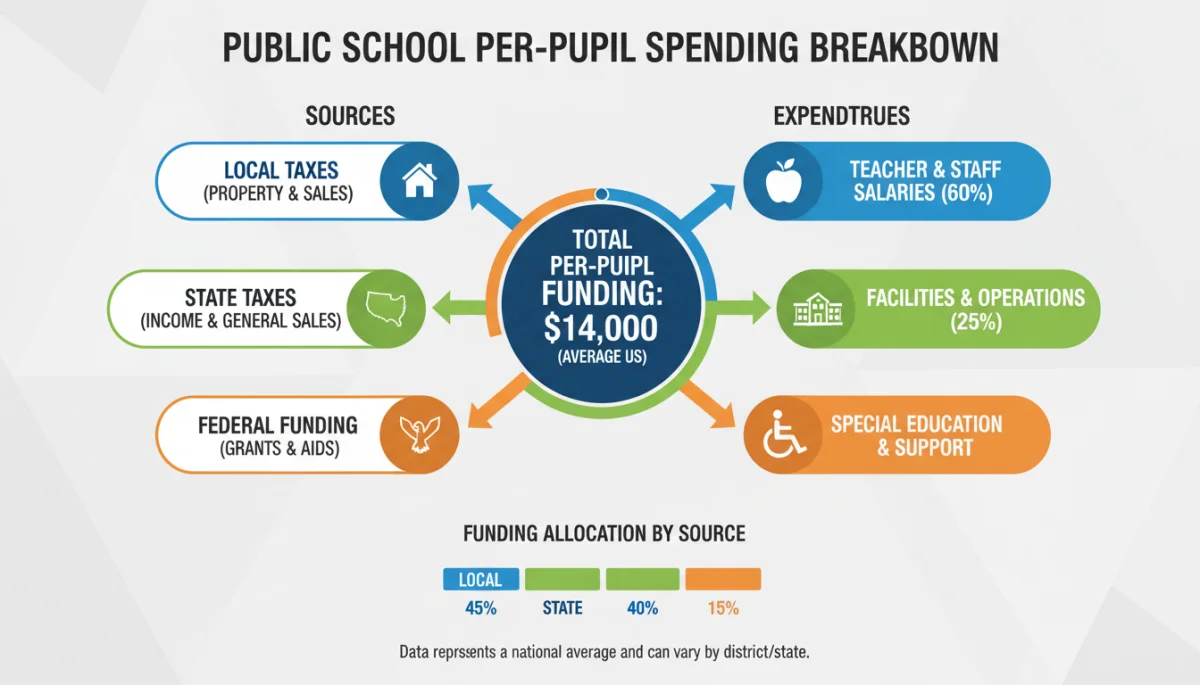
Analyzing per-pupil spending offers a tangible metric for understanding the financial resources dedicated to each student in both public and private school settings. While direct comparisons can be challenging due to differing accounting practices and revenue streams, available data for 2026 indicates persistent trends and some evolving dynamics. Generally, public schools, especially those in well-funded districts, often exhibit higher per-pupil spending than many private schools, though this is not universally true.
Public school per-pupil spending includes all operational costs, such as teacher salaries, administrative expenses, facilities maintenance, and special education services. For private schools, per-pupil figures primarily reflect tuition, endowment income, and donations allocated directly to student services. It’s important to consider what these figures represent beyond just the dollar amount, such as class sizes, specialized programs, and teacher-student ratios.
Factors influencing per-pupil expenditure
Several variables contribute to the differences observed in per-pupil spending. In public schools, the cost of special education and other mandated services can significantly inflate the average. Private schools, while not bound by the same mandates, often choose to invest heavily in specific areas like technology or arts programs.
- Special education costs: Public schools bear the legal responsibility for providing extensive special education services, which is a major expenditure.
- Teacher salaries and benefits: Public school teachers are typically part of unionized systems with structured salary scales and comprehensive benefits.
- Facilities and infrastructure: Maintaining large public school campuses often requires substantial investment in upkeep and modernization.
While the raw numbers for per-pupil spending can seem straightforward, a deeper dive reveals the nuances of how these funds are utilized. Public schools often manage larger student populations and broader mandates, while private schools tend to have more flexibility in allocating resources to align with their specific mission and values. Parents should look beyond the headline figures to understand what each dollar truly buys in terms of educational experience.
Impact of funding on educational resources and outcomes
The disparities in funding between public and private schools, as well as among public schools themselves, inevitably translate into differences in educational resources and, consequently, student outcomes. Adequate funding can profoundly influence everything from teacher quality and curriculum breadth to facility conditions and access to extracurricular activities. These resources collectively shape the learning environment and opportunities available to students.
In public schools, particularly those in underfunded districts, limited budgets can lead to larger class sizes, fewer experienced teachers, outdated textbooks, and insufficient technology. This can create a challenging environment for both students and educators, potentially hindering academic progress. Conversely, well-funded public schools and many private institutions can leverage their financial resources to offer enhanced programs, cutting-edge facilities, and a lower student-to-teacher ratio, which can positively impact individualized attention and academic achievement.
Resource allocation and student success
The way funds are allocated directly affects the quality and variety of educational offerings. For instance, robust funding allows schools to invest in advanced placement courses, STEM programs, arts education, and athletic opportunities that enrich the student experience.
- Teacher retention: Competitive salaries and professional development opportunities attract and retain high-quality educators.
- Technology integration: Sufficient funding enables schools to provide modern computing resources, interactive whiteboards, and digital learning platforms.
- Support services: Access to counselors, psychologists, and learning specialists is often tied to a school’s financial capacity.
Ultimately, the impact of funding extends beyond academic metrics to encompass the holistic development of students. Schools with ample resources are better equipped to address diverse learning needs, foster a stimulating environment, and prepare students for future success in higher education and careers. Parents must consider how a school’s financial health aligns with their educational priorities for their children.
Government policies and future funding trends for 2026
Government policies at federal, state, and local levels play a crucial role in shaping the landscape of school funding, and these policies are subject to continuous evolution. For 2026, several key trends and policy debates are expected to influence how both public and private schools are financed, potentially altering the current funding disparities and resource allocation. Understanding these political and economic currents is essential for anticipating future changes in the educational system.
At the federal level, discussions around reauthorizing major education acts and allocating funds for specific initiatives, such as infrastructure improvements or mental health support in schools, will continue. State governments are increasingly exploring new funding formulas aimed at equity, often by increasing state aid to districts with lower property tax bases. Additionally, the debate over school choice and voucher programs, which can divert public funds to private schools, remains a significant political battleground with implications for both sectors.
Emerging trends and legislative debates
Several emerging trends could redefine how schools are funded. These include increased focus on performance-based funding, where a portion of state aid is tied to student outcomes, and the growing interest in public-private partnerships for educational initiatives.
- School choice expansion: The push for universal school choice and expanded voucher programs could reallocate significant public funds.
- Equity-focused reforms: States are likely to continue implementing policies designed to reduce funding gaps between wealthy and poor districts.
- Technology and infrastructure grants: Federal and state governments may increase funding for digital learning tools and school building modernizations.
The political climate and economic conditions in 2026 will undoubtedly influence the passage and implementation of these policies. Parents should stay informed about legislative developments in their states and at the national level, as these decisions will directly affect the financial health and educational offerings of the schools their children attend. The future of school funding is a dynamic and ever-changing arena.
Choosing the right school: financial considerations for parents
When making the crucial decision about which school is best for their child, parents must carefully weigh a multitude of factors, with financial considerations often at the forefront. Understanding the funding models of both public and private institutions, and how these models translate into educational resources, is paramount. This involves not only assessing direct costs but also considering the long-term value and potential return on investment in a child’s education.
For public schools, while tuition-free, parents should consider indirect costs such as school supplies, transportation, extracurricular fees, and potential tutoring needs if the school’s resources are limited. For private schools, the direct cost of tuition is a significant factor, but financial aid and scholarship opportunities can make these institutions more accessible. It’s vital to research each school’s financial aid policies and application processes thoroughly.
Evaluating value beyond tuition
The ‘value’ of an education extends beyond the immediate financial outlay. Parents should consider the student-teacher ratio, specialized programs, college preparatory resources, and the overall learning environment when making their choice.
- Academic rigor: Assess how a school’s curriculum and teaching methods align with your child’s learning style and academic goals.
- Extracurricular opportunities: Consider the breadth of sports, arts, and clubs available, as these contribute to holistic development.
- Post-graduation support: Evaluate college counseling services, alumni networks, and career guidance offered by the institution.
Ultimately, the ‘right’ school is a deeply personal choice that balances financial realities with educational aspirations. By conducting thorough research into funding, resources, and outcomes, parents can make an informed decision that best supports their child’s unique needs and future success. Engaging with school communities, asking detailed questions, and considering both immediate and long-term implications are crucial steps in this important process.
| Key Aspect | Public vs. Private Funding in 2026 |
|---|---|
| Primary Funding Sources | Public: Local, State, Federal Taxes. Private: Tuition, Endowments, Donations. |
| Per-Pupil Spending Dynamics | Public often higher due to mandates (e.g., special ed), but private varies greatly by institution. |
| Resource Implications | Funding impacts class size, teacher quality, facilities, and program offerings. |
| Future Trends (2026) | Policy debates on school choice, equity reforms, and technology grants are key. |
Frequently asked questions about school funding
Local property taxes are a primary funding source for public schools. Districts with higher property values typically collect more revenue, leading to greater per-pupil spending and access to more resources compared to districts in areas with lower property values.
Private schools primarily rely on tuition fees, which can vary significantly. Additionally, endowments, which are invested funds, and ongoing fundraising efforts, including donations from alumni and foundations, are crucial for their financial sustainability and growth.
In 2026, per-pupil spending can be higher in well-funded public school districts, especially due to mandates like special education. However, many elite private schools also have very high per-pupil spending due to high tuition and large endowments.
Government policies in 2026, including federal grants, state funding formulas, and debates over school choice and voucher programs, significantly impact both public and private school finances. These policies can shift resource allocation and educational opportunities.
Parents should consider direct costs (tuition, fees) and indirect costs (transportation, supplies). Beyond cost, evaluate the value derived from resources like teacher quality, specialized programs, and post-graduation support, aligning with their child’s needs and future goals.
Conclusion
The intricate landscape of US school funding in 2026 presents a multifaceted challenge for parents seeking the best educational path for their children. Whether navigating the tax-dependent structures of public education or the tuition- and philanthropy-driven models of private institutions, understanding the financial underpinnings is crucial. The data underscores persistent disparities and evolving policy debates that directly impact resource availability and, consequently, student experiences and outcomes. By thoroughly researching funding mechanisms, per-pupil spending, and future trends, parents can make more informed decisions, ensuring their children receive an education that aligns with their needs and aspirations in a dynamic educational environment.
