Utility Bill Support: 2026 Federal Programs to Save Hundreds Monthly
Federal programs in 2026 offer crucial financial aid for energy and water costs, significantly helping households save hundreds of dollars monthly on essential utility bills across the United States.
Navigating the rising costs of living can be challenging, and utility bills often represent a significant burden for many households. The good news is that for 2026, several federal programs are designed to provide direct relief, helping you save hundreds monthly on your energy and water expenses. Understanding these initiatives is the first step toward securing vital financial assistance and easing your household budget.
Understanding the landscape of federal utility assistance in 2026
The federal government continues its commitment to supporting American households struggling with utility costs. For 2026, various programs aim to alleviate financial strain by directly assisting with energy and water bills. These initiatives are crucial for families, seniors, and individuals facing economic challenges, ensuring access to essential services without undue hardship.
These programs are not merely stop-gap measures; they are designed to provide sustainable relief and promote energy and water efficiency where possible. Eligibility criteria can vary, making it important for potential applicants to understand the specifics of each program.
Key federal programs for energy bill relief
One of the most well-known programs is the Low Income Home Energy Assistance Program (LIHEAP). LIHEAP provides grants to states, territories, and tribal organizations to help low-income households cover their home energy costs, whether for heating or cooling. It also offers assistance for energy crisis situations and weatherization improvements.
- LIHEAP: Offers financial aid for heating, cooling, and energy crisis intervention.
- Weatherization Assistance Program (WAP): Helps low-income households reduce energy bills by making their homes more energy efficient.
- Emergency Rental Assistance Program (ERAP): While primarily for rent, some ERAP funds can cover past due utility bills for eligible renters.
These programs are administered at the state and local levels, meaning application processes and specific benefits can differ. It’s advisable to contact your state or local energy assistance office for precise details on how to apply and what documentation is required.
Federal initiatives for water and wastewater assistance
Beyond energy, federal efforts also extend to water and wastewater services. The Affordable Connectivity Program (ACP) can indirectly help by freeing up household funds, though direct water bill assistance often comes from specific programs like the Low Income Household Water Assistance Program (LIHWAP).
- LIHWAP: Provides financial aid to low-income households for water and wastewater bills.
- State-specific programs: Many states also have their own programs, often funded in part by federal grants, to address water affordability.
Understanding the interplay between federal and state programs is key to maximizing your potential savings. Many households may qualify for assistance from multiple sources, significantly reducing their overall utility burden.
In summary, 2026 presents a robust framework of federal utility bill support programs. These initiatives are vital resources for countless Americans, offering direct financial aid and promoting long-term sustainability through efficiency measures. Exploring each program’s specific requirements and application procedures is the essential next step for anyone seeking relief.
Eligibility criteria and how to apply for assistance
Accessing federal utility bill support requires understanding specific eligibility criteria, which can vary based on the program and your geographic location. Generally, these programs target low-income households, but the exact income thresholds and other requirements are crucial to know. It’s not just about income; household size, residency, and specific needs can also play a role.
The application process, while sometimes perceived as complex, is designed to be accessible. Gathering the necessary documentation beforehand can significantly streamline your experience. This often includes proof of income, household members, residency, and copies of your utility bills.
General eligibility requirements
Most federal utility assistance programs use federal poverty guidelines as a baseline, but states and local agencies may set their own income limits, often a percentage above the federal poverty level. For example, LIHEAP generally serves households with incomes up to 150% or 175% of the federal poverty level, or 60% of the state median income, whichever is greater.
- Income Level: Typically based on a percentage of the federal poverty guidelines or state median income.
- Household Size: Income thresholds usually adjust based on the number of people in your household.
- Residency: Applicants must generally be legal residents of the state or tribal area where they are applying.
- Utility Responsibility: You must be responsible for paying your own home energy or water bills.
It’s important to note that even if your income is slightly above the standard threshold, some programs might offer exceptions or alternative pathways, particularly if you have extenuating circumstances such as high medical expenses or recent job loss.
Step-by-step application process
Applying for utility assistance typically involves a few key steps. The first is identifying the correct agency. For energy assistance (LIHEAP, WAP), this is usually your state’s energy assistance office or a local community action agency. For water assistance (LIHWAP), it might be a state social services department or a designated local organization.
- Identify the relevant agency: Search online for “LIHEAP [your state]” or “LIHWAP [your state]” to find local contact information.
- Gather required documents: Prepare proof of income (pay stubs, tax returns, benefit letters), identification for all household members, proof of residency (lease agreement, utility bill), and recent utility bills.
- Complete the application: This can often be done online, by mail, or in person. Be thorough and accurate to avoid delays.
- Submit and follow up: Once submitted, keep a copy for your records and follow up with the agency if you don’t hear back within a reasonable timeframe.
Don’t hesitate to reach out to the administering agency if you have questions or need assistance completing the application. They are there to help guide you through the process.
In conclusion, while eligibility criteria and application processes require attention to detail, the federal utility bill support programs are designed to be accessible. By understanding what is needed and how to apply, you can significantly reduce your financial burden and ensure continuous access to essential home services.
Maximizing savings: combining federal and local programs
While federal programs provide a strong foundation for utility bill relief, maximizing your savings often involves combining these with state, local, and even utility-specific programs. Many states and municipalities offer their own assistance programs, sometimes using federal block grants, while utility companies frequently have discount rates or payment plans for low-income customers. This multi-layered approach can lead to substantial monthly savings, potentially hundreds of dollars, by stacking benefits where possible.
Understanding the ecosystem of available programs requires a bit of research, but the effort can yield significant financial benefits. It’s about being strategic and knowing where to look for complementary support. Many communities have consolidated resources or referral services to help residents navigate these options.
State and municipal assistance programs
Nearly every state offers some form of energy or water assistance beyond the federal baseline. These programs might have different eligibility requirements or focus on specific demographics, such as seniors, individuals with disabilities, or families with young children. Some states also provide grants for energy efficiency upgrades, such as insulation or new windows, which can lead to long-term savings.
- State Energy Offices: Often administer state-funded energy assistance programs in conjunction with LIHEAP.
- Local Social Services: Many cities and counties have social service departments that offer emergency utility assistance or referrals.
- Housing Authorities: Can sometimes provide utility vouchers or connect residents with relevant programs.
These local programs are often crucial for bridging gaps that federal programs might not cover, or for providing additional support during times of crisis. Check your state’s official government website or contact your local city hall for information on what’s available in your area.
Utility company programs and discounts
Many utility providers, both public and private, recognize the financial challenges their customers face and offer their own assistance programs. These can include discounted rates for low-income customers, budget billing plans to stabilize monthly payments, or one-time credits for those experiencing hardship.
- Discounted Rates: Special lower rates for customers who meet certain income criteria.
- Budget Billing: A plan that averages your annual utility costs into predictable monthly payments, avoiding seasonal spikes.
- Arrearage Management Plans: Programs designed to help customers pay off past-due balances over time, often forgiving a portion if payments are made consistently.
It’s always a good idea to contact your specific energy and water providers directly to inquire about any assistance programs they offer. Many of these programs are not widely advertised, so proactive inquiry is essential. Combining these utility-specific benefits with federal and state aid can create a comprehensive safety net for your household budget.
In conclusion, a multi-faceted approach to utility bill support, leveraging federal, state, local, and utility-specific programs, is the most effective way to maximize savings. By exploring all available avenues, households can significantly reduce their financial burden and gain greater control over their monthly expenses.
Long-term solutions: energy and water efficiency
While direct financial assistance provides immediate relief, investing in energy and water efficiency offers sustainable, long-term savings. Federal programs like the Weatherization Assistance Program (WAP) are specifically designed to help low-income households reduce their utility bills by making their homes more energy-efficient. Beyond federal aid, adopting simple habits and making smart upgrades can further slash your monthly expenses, contributing to hundreds of dollars in annual savings.
Efficiency isn’t just about saving money; it also contributes to environmental sustainability and can improve the comfort and safety of your home. The upfront investment in some efficiency measures often pays for itself rapidly through reduced utility costs.
Federal weatherization and efficiency initiatives
The Weatherization Assistance Program (WAP) is a cornerstone of federal efforts to promote energy efficiency among low-income households. Through WAP, eligible homeowners and renters can receive free weatherization services, which might include:
- Insulation: Improving attic, wall, and floor insulation to prevent heat loss or gain.
- Air Sealing: Sealing drafts around windows, doors, and other openings to reduce air leakage.
- HVAC Repair/Replacement: Repairing or replacing inefficient heating and cooling systems.
- Water Heater Upgrades: Installing more efficient water heaters or insulation for existing ones.
These improvements can significantly reduce energy consumption, leading to lower bills year-round. WAP services are delivered by local agencies, often community action agencies, and are a fantastic resource for those looking to make permanent reductions in their energy costs.
Practical tips for household energy and water conservation
Beyond federal programs, many everyday actions can lead to considerable savings on your utility bills. These simple changes require minimal effort but can have a big impact over time.
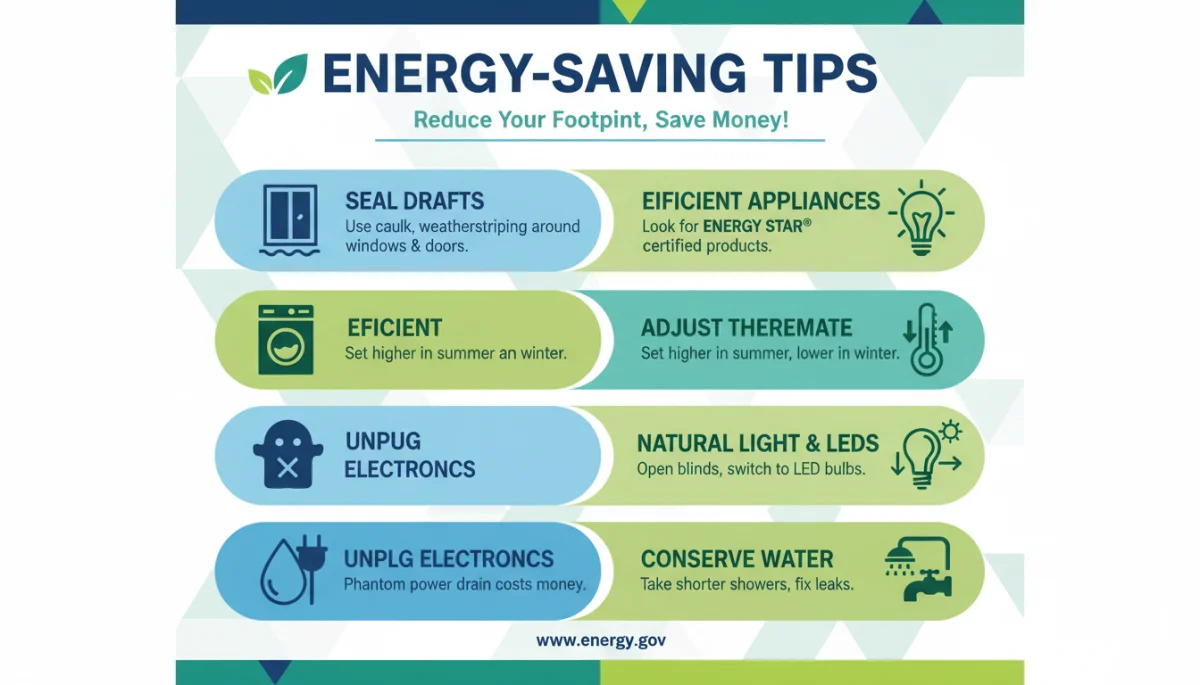
Energy-saving habits:
- Adjust Thermostat: Set your thermostat a few degrees lower in winter and higher in summer.
- Unplug Electronics: Unplug chargers and electronics when not in use to avoid “phantom load.”
- Use Energy-Efficient Appliances: When replacing appliances, look for ENERGY STAR certified models.
- LED Lighting: Switch to LED bulbs, which consume significantly less energy and last longer.
Water conservation tips:
- Fix Leaks: Repair leaky faucets and toilets promptly; even small leaks waste gallons of water.
- Low-Flow Fixtures: Install low-flow showerheads and aerators on faucets.
- Efficient Appliances: Use water-efficient washing machines and dishwashers.
- Shorter Showers: Reduce shower times to conserve water.
By combining federal assistance with conscious efforts toward efficiency, households can create a powerful strategy for managing utility costs. These long-term solutions not only save money but also contribute to a more sustainable lifestyle and a more comfortable home environment.
Understanding the impact of utility costs on household budgets
Utility costs are a foundational component of household budgets, directly impacting financial stability and quality of life. For many American families, especially those with limited incomes, energy and water bills can consume a disproportionately large share of their monthly earnings. This financial strain often forces difficult choices between paying for utilities and other essential needs like food, medicine, or rent.
The fluctuating nature of utility prices, influenced by factors like weather, global energy markets, and infrastructure investments, adds another layer of unpredictability to household finances. Federal programs in 2026 aim to mitigate these impacts, providing a crucial buffer against economic hardship and helping households maintain a baseline of financial security.
The disproportionate burden on vulnerable populations
Low-income households, seniors, and individuals with disabilities often bear the heaviest burden of high utility costs. These groups may live in older, less energy-efficient homes, have fixed incomes, or face health conditions that necessitate higher energy consumption (e.g., for medical equipment or maintaining specific indoor temperatures). When utility bills spike, these populations are most susceptible to energy poverty, risking disconnection and adverse health outcomes.
- Seniors: Often on fixed incomes, making them vulnerable to price increases.
- Families with Children: Higher energy needs for larger households, coupled with childcare costs.
- Individuals with Disabilities: May require specific temperature controls or operate essential medical equipment.
- Rural Communities: Can face higher per-unit costs for utilities due to less dense infrastructure.
Federal programs serve as a critical lifeline, ensuring that even the most vulnerable populations can afford basic services and avoid the severe consequences of utility shut-offs, such as health risks, loss of employment, or even eviction.
Economic ripple effects and community well-being
The impact of utility costs extends beyond individual households to the broader economy and community well-being. When a significant portion of a household’s income is diverted to utility payments, there’s less money available for other local spending, which can stifle economic growth. Moreover, high utility burdens can lead to increased stress, poorer health outcomes, and reduced educational opportunities, creating a cycle of poverty.
- Reduced Consumer Spending: Less disposable income for local businesses.
- Health Impacts: Stress, illness from inadequate heating/cooling, or lack of clean water.
- Educational Barriers: Children may struggle with homework without proper lighting or heating.
- Housing Instability: Inability to pay utilities can contribute to eviction or housing insecurity.
By providing utility bill support, federal programs not only offer direct financial relief but also contribute to a more stable and resilient community. They allow families to allocate resources to other essential needs, fostering better health, education, and economic participation across the nation. This holistic approach underscores the profound importance of these assistance initiatives.
In conclusion, understanding the significant impact of utility costs on household budgets, especially for vulnerable populations, highlights the indispensable role of federal assistance programs. These initiatives are not just about paying bills; they are about fostering financial stability, improving public health, and strengthening communities nationwide.
Future outlook: potential changes and continued support
The landscape of federal utility bill support is dynamic, constantly evolving in response to economic conditions, technological advancements, and policy priorities. While 2026 sees established programs like LIHEAP and WAP continuing to provide critical assistance, future years may bring new initiatives, adjustments to existing programs, or expanded funding. Staying informed about these potential changes is key for households relying on this support to manage their energy and water costs effectively.
Advocacy for continued and enhanced utility assistance remains strong, driven by consumer groups, environmental organizations, and public health advocates. The ongoing commitment to addressing energy poverty and promoting affordability is a bipartisan concern, suggesting a sustained focus on these vital programs.
Anticipated policy developments and funding trends
Looking ahead, several factors could influence federal utility assistance. Climate change initiatives, for example, may lead to increased funding for energy efficiency and renewable energy programs, which indirectly reduce utility bills. Infrastructure investments could also play a role, ensuring more resilient and affordable utility services.
- Increased Funding for Efficiency: Greater emphasis on programs like WAP to reduce long-term energy consumption.
- Renewable Energy Incentives: Potential for more federal incentives for rooftop solar or community solar projects, lowering electricity bills.
- Infrastructure Modernization: Investments in aging water infrastructure could reduce leaks and improve service reliability, potentially impacting water rates.
- Targeted Relief: Continued focus on providing assistance to the most vulnerable populations.
Policy discussions often revolve around making programs more accessible, streamlining application processes, and ensuring that benefits reach those most in need. These efforts could result in more user-friendly systems and broader eligibility in the future.
Staying informed and advocating for continued support
For households that depend on utility assistance, staying informed about program updates is crucial. Regularly checking government websites, subscribing to newsletters from relevant agencies, and connecting with local community organizations can provide timely information on changes to eligibility, application deadlines, and new opportunities.
- Government Websites: Official sites for the Department of Energy (DOE) and Department of Health and Human Services (HHS) are primary sources.
- Local Agencies: Community Action Agencies and state energy/water assistance offices often disseminate local-specific information.
- Advocacy Groups: Organizations focused on energy justice and consumer rights can provide insights into policy developments and advocacy efforts.
Furthermore, actively participating in public comment periods or contacting elected officials to share personal stories can help advocate for the continuation and expansion of these vital programs. Collective voices can influence policy decisions and ensure that utility assistance remains a priority.
In conclusion, while 2026 offers robust federal utility bill support, the future holds potential for evolution and enhancement. By staying informed about policy developments and actively engaging in advocacy, individuals and communities can help shape a future where essential utility services remain affordable and accessible for all.
| Key Program | Brief Description |
|---|---|
| LIHEAP | Assists low-income households with energy costs (heating/cooling). |
| LIHWAP | Provides aid for low-income households’ water and wastewater bills. |
| WAP | Helps reduce energy bills through home weatherization and efficiency upgrades. |
| Local/Utility Programs | State, municipal, and utility-specific aid for additional savings. |
Frequently asked questions about utility bill support
The main goal is to provide direct financial relief to low-income households across the United States for energy and water costs. These programs aim to prevent utility shut-offs, ensure access to essential services, and alleviate the financial burden on vulnerable populations, helping them save hundreds monthly.
Eligibility for LIHEAP and LIHWAP is primarily based on household income relative to federal poverty guidelines or state median income levels. Household size also impacts the income threshold. You must also be responsible for your utility bills. Contact your state’s energy or social services office for precise requirements.
Yes, it is often possible to receive assistance for both energy (via LIHEAP) and water (via LIHWAP) bills if you meet the eligibility criteria for each program. Additionally, you may qualify for state, local, or utility-specific programs that offer further support for either or both services.
WAP helps low-income households reduce their energy bills by making their homes more energy-efficient. Services can include insulation, air sealing, and HVAC repairs. These improvements lead to long-term savings by decreasing energy consumption, complementing direct financial aid.
Begin by contacting your state’s energy assistance office or a local community action agency. They can provide information on federal programs like LIHEAP and LIHWAP, as well as state-specific initiatives. Also, reach out to your individual utility providers for any company-specific discount programs or payment plans.
Conclusion
The availability of federal utility bill support programs in 2026 offers a critical lifeline for countless American households grappling with the high costs of energy and water. By understanding eligibility, navigating application processes, and strategically combining federal aid with state, local, and utility-specific initiatives, families can significantly reduce their monthly expenses and achieve greater financial stability. Beyond immediate relief, embracing energy and water efficiency measures provides a sustainable path to long-term savings, ensuring that essential services remain accessible and affordable for all. Staying informed and advocating for these vital programs will continue to be crucial in fostering resilient communities nationwide.
