Financial Literacy for US Children 2026: Teach Money from Age 5
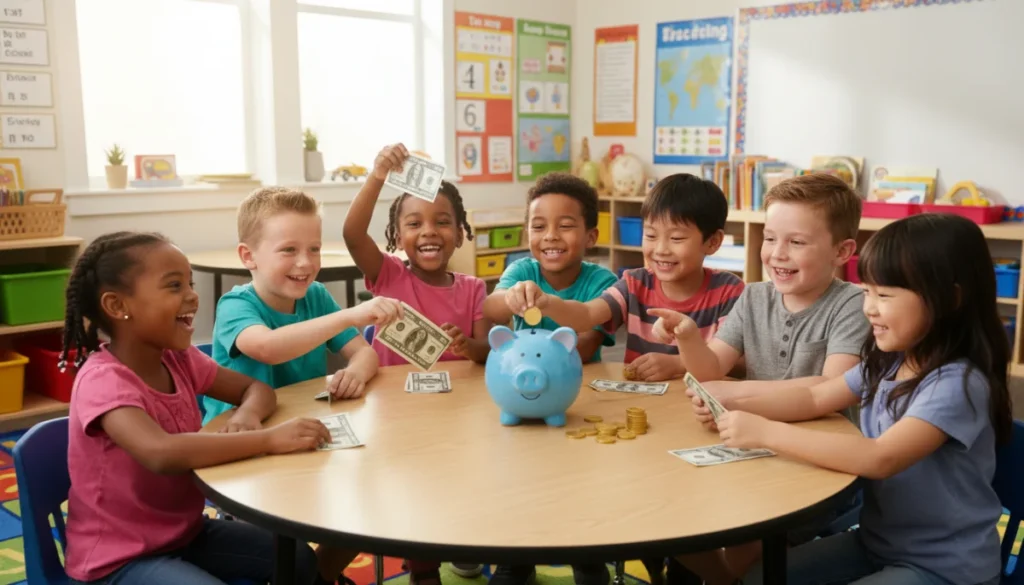
Teaching financial literacy to US children from age 5 in 2026 is crucial for developing responsible money habits and ensuring a strong foundation for their future financial well-being.
Are you ready to equip your child with the essential skills for a financially secure future? In 2026, teaching financial literacy children in the US from as early as age five is not just beneficial, but a foundational step towards raising financially responsible adults. This guide offers practical, actionable strategies to integrate money management into everyday life.
Understanding the importance of early financial education
Starting financial education early, specifically around age five, lays a critical groundwork for a child’s understanding of money. At this age, children are highly impressionable and eager to learn, making it an ideal time to introduce basic concepts of earning, saving, and spending. The world of 2026 presents unique financial challenges and opportunities, making this early intervention more vital than ever.
Many parents wonder if age five is too young, but developmental psychologists and financial experts agree that simple concepts can be grasped. Children learn through play and observation, making hands-on activities and real-life examples the most effective teaching tools. This early exposure helps demystify money and build a positive relationship with financial concepts, rather than fear or confusion.
The cognitive readiness of young children
- Curiosity: Children at age five are naturally curious about the world around them, including transactions they observe.
- Basic Math Skills: They are developing fundamental counting and simple addition/subtraction skills, which are directly applicable to money.
- Concept of Exchange: They can begin to understand that goods and services require payment.
- Delayed Gratification: Early lessons can introduce the idea of waiting for something desired, a precursor to saving.
By leveraging these natural developmental stages, parents can seamlessly integrate financial lessons into daily routines without it feeling like a chore. The goal is to build a foundation that can be expanded upon as they grow, ensuring they are well-prepared for the complexities of adult finances.
Ultimately, early financial education is about more than just numbers; it’s about instilling values like patience, responsibility, and generosity. These values are integral to making sound financial decisions throughout life, contributing to both personal well-being and broader societal stability. Starting early ensures these values are deeply ingrained.
Introducing basic money concepts through play
Play is a child’s primary mode of learning, and financial concepts are no exception. By incorporating money-related activities into playtime, parents can make learning engaging and fun for their five-year-olds. This approach helps children grasp abstract ideas in a concrete way, forming positive associations with money management from the start.
Simple games involving toy money, pretend stores, or even setting up a ‘bank’ can be incredibly effective. These activities allow children to practice counting, making change, and understanding the value of different denominations. The key is to keep it light-hearted and focused on exploration, rather than rigid rules.
Engaging activities for young learners
- Pretend Store: Set up a mini-store with household items and use play money to buy and sell.
- Money Sorting: Help children sort coins and bills, identifying their names and values.
- Piggy Bank Goals: Introduce a clear piggy bank for saving, discussing what they are saving for.
- Allowance System: Start a simple allowance for small chores, linking work to earning.
Through these playful interactions, children begin to understand the tangible aspects of money. They learn that money isn’t infinite and that choices need to be made about how it’s used. This practical experience is invaluable for developing a realistic perspective on finances.
Moreover, these activities provide excellent opportunities for parents to model good financial behavior. When children see their parents making thoughtful decisions about spending and saving, they are more likely to adopt similar habits themselves. This observational learning is a powerful component of early financial education, reinforcing lessons learned through play.
The power of a three-jar system: save, spend, share
A highly effective and visually intuitive method for teaching young children about money management is the three-jar system. This approach simplifies the complex world of finances into three distinct categories: saving, spending, and sharing. Each jar represents a different purpose for money, making it easy for children to understand where their allowance or earned money goes.
When a child receives money, whether from an allowance or a gift, they divide it among the three jars. The ‘spend’ jar is for immediate wants, the ‘save’ jar is for future goals (like a special toy), and the ‘share’ jar is for charitable giving or helping others. This physical separation helps reinforce the purpose of each financial action.
Implementing the three-jar system
To set up this system, you’ll need three clear containers, labeled clearly with ‘Spend,’ ‘Save,’ and ‘Share.’ Involve your child in decorating them to personalize the experience. When they receive money, guide them in dividing it. A common approach is to allocate a larger portion to spending initially, then gradually increase the saving and sharing percentages as they mature.
For the ‘spend’ jar, allow children autonomy over their choices for small purchases, even if they make what you consider a ‘bad’ decision. Learning from mistakes is a crucial part of financial education. For the ‘save’ jar, help them set a specific, achievable goal, like a toy they really want. This teaches patience and goal-setting.
The ‘share’ jar introduces the concept of giving back. Discuss with your child different causes or people they might want to help. This fosters empathy and generosity, showing them that money can be used to make a positive impact beyond their immediate desires. This holistic approach builds a well-rounded financial perspective.
The three-jar system provides a tangible representation of financial choices and consequences. It teaches children that money isn’t just for immediate gratification but can be a tool for future security and helping others. This simple yet profound lesson sets the stage for a lifetime of responsible financial behavior.
Real-world applications: grocery stores and budgeting
Moving beyond the abstract, integrating financial lessons into real-world scenarios is paramount for children’s understanding. The grocery store, for instance, offers a treasure trove of educational opportunities. It’s a place where children can observe pricing, compare values, and witness transactions firsthand, making the concepts of money tangible and relevant.
Before heading to the store, involve your child in creating a simple shopping list and discussing a budget for a few select items. For example, assign them a small amount of money and task them with finding the best deal on their favorite fruit or a snack. This hands-on experience transforms a routine chore into an interactive learning session.
Practical steps for real-world learning
When at the grocery store, encourage your child to participate. Ask them to locate specific items, compare prices between different brands, or even calculate the total cost of their chosen items (with your help, of course). This not only sharpens their math skills but also introduces them to the concept of value for money and making informed purchasing decisions.

Another critical aspect is discussing the difference between needs and wants. Point out essential items like milk and bread as ‘needs’ and a candy bar as a ‘want.’ This distinction helps children prioritize spending and understand that resources are often limited, necessitating thoughtful choices. It’s a fundamental lesson in budgeting that translates into adult life.
Allowing children to hand over the money at checkout and receive change (if applicable) further solidifies their understanding of transactions. This interaction can be a powerful moment of learning, showing them the direct exchange of money for goods. These seemingly small actions accumulate to build a robust understanding of financial operations.
By consistently involving children in these everyday financial activities, parents provide invaluable experiential learning. These real-world applications cement theoretical concepts, helping children develop practical skills and a confident approach to managing money in various situations. It makes financial literacy a lived experience, not just a classroom lesson.
Teaching about earning and the value of work
Connecting effort to earning is a cornerstone of financial literacy for young children. Introducing the concept of an allowance tied to chores or responsibilities helps children understand that money is earned through work and effort, not simply given. This fosters a strong work ethic and an appreciation for the value of their contributions to the household.
When establishing an allowance system, it’s important to differentiate between expected daily contributions (like making their bed) and specific tasks that earn money (like helping with laundry or watering plants). This distinction helps children understand that some responsibilities are part of being a family member, while others are opportunities to earn.
Structuring an effective allowance system
- Clear Expectations: Define specific chores and the corresponding allowance amount for each.
- Consistency: Pay the allowance regularly, perhaps weekly, to establish a predictable routine.
- Age-Appropriate Tasks: Ensure chores are suitable for a five-year-old’s capabilities.
- No Bailouts: If they spend all their money, resist the urge to give them more until the next allowance cycle.
The allowance should be a meaningful amount, but not so large that it negates the need for saving or thoughtful spending. The goal is to provide enough to make choices and experience consequences. When children see their efforts directly translate into money they can use, they begin to internalize the concept of earning potential.
Discussing the types of jobs adults do to earn money can also broaden their perspective. Explain that people work to provide for their families and to purchase goods and services. This helps children connect their small-scale earning experiences to the larger economic world they will eventually enter.
Ultimately, teaching about earning instills a sense of pride and accomplishment. It empowers children to take ownership of their financial resources and understand that personal effort plays a significant role in their financial well-being. This early lesson in the value of work is a crucial building block for future independence.
Navigating digital money and future financial tools
As we look to 2026 and beyond, financial literacy must evolve to include understanding digital money and modern payment methods. While five-year-olds won’t be managing cryptocurrency, introducing them to the concept of invisible money and digital transactions is increasingly important. They will inevitably encounter these forms of money through observation and eventually, personal use.
Start by explaining that money isn’t always physical cash. When you use a debit or credit card, explain that it’s linked to money in a bank account. You can use analogies, like comparing a card to a ‘magic key’ that accesses their savings jar, but emphasizing that the money still comes from somewhere and isn’t limitless.
Introducing digital concepts simply
When you make online purchases, briefly explain that you’re using money from a digital account. You don’t need to delve into complex banking systems, but a simple explanation that ‘the money goes from our bank to the store’s bank’ can suffice. This demystifies the process and makes it less abstract.
As children get a little older, you can introduce very basic concepts of online safety, such as not sharing personal information or passwords. While this might be more relevant for slightly older children, planting the seeds of digital caution early is beneficial in today’s interconnected world. It’s about building awareness without creating fear.
The goal isn’t to make five-year-olds experts in fintech, but rather to ensure they don’t grow up thinking that money only exists in physical form. By normalizing digital transactions and providing simple explanations, parents can prepare their children for a future where digital currency and online banking are the norm.
This forward-looking approach to financial literacy ensures that children are equipped not just for today’s financial landscape but for the evolving technological advancements of tomorrow. Preparing them for digital money is a proactive step in securing their future financial adaptability and understanding.
Fostering a mindset of generosity and gratitude
Beyond the mechanics of earning, saving, and spending, true financial literacy encompasses a deeper understanding of generosity and gratitude. Teaching children to share their resources, whether money, time, or possessions, cultivates empathy and a sense of community. This aspect of financial education is just as important as understanding budgeting or investing.
The ‘share’ jar in the three-jar system is an excellent starting point for this lesson. Encourage your child to decide who or what cause they would like to support. It could be donating to a local animal shelter, contributing to a food drive, or helping a family member in need. The act of giving, even a small amount, can be incredibly impactful.
Cultivating a giving spirit
Discuss with your child the positive impact their generosity can have. For example, if they donate to a food bank, explain how their contribution helps provide meals for families. Seeing the direct result of their giving reinforces the value of sharing and helps them understand that money can be used for good.
Gratitude also plays a significant role. Encourage children to appreciate what they have, rather than constantly focusing on what they lack. Simple practices, like discussing things they are thankful for at dinner, can foster a mindset of contentment and reduce the urge for excessive consumption. This balance is crucial for financial well-being.
Modeling generous behavior is perhaps the most powerful lesson. When children see their parents contributing to charities, helping neighbors, or volunteering their time, they learn that giving is a natural and rewarding part of life. These observations speak louder than any lecture.
By integrating lessons on generosity and gratitude into financial education, parents are not just teaching children how to manage money, but how to be compassionate and responsible members of society. These values enrich their lives and contribute to a more caring world, making financial literacy a truly holistic endeavor.
| Key Financial Concept | Brief Description for Children |
|---|---|
| Save | Putting money aside for something you want later. |
| Spend | Using money to buy things you need or want now. |
| Share | Giving money to help others or good causes. |
| Earn | Getting money for doing work or chores. |
Frequently asked questions about teaching financial literacy
Yes, age five is an excellent time to introduce basic financial concepts. Children at this age are curious and capable of grasping simple ideas like counting, saving, and the value of items through play and real-world examples. Starting early builds a strong foundation for future financial understanding.
Incorporate play-based learning! Set up a pretend store with toy money, use a clear piggy bank for saving goals, or involve them in grocery shopping decisions. Making it interactive and relevant to their daily lives ensures they remain engaged and eager to learn without feeling lectured.
The three-jar system involves labeling three clear containers for ‘Spend,’ ‘Save,’ and ‘Share.’ When your child receives money, they divide it among these jars. This visually teaches them about allocating resources for immediate wants, future goals, and charitable giving, fostering responsible habits.
An allowance linked to age-appropriate chores can be very effective. It teaches them that money is earned through effort. Be consistent with payments and clearly define tasks. This system helps them understand the value of work and the connection between effort and earning.
Keep it simple. Explain that money isn’t always physical cash and that cards access money in a bank account. Use analogies, like a ‘magic key,’ and briefly mention that money moves from one bank to another during online purchases. This familiarizes them with modern financial tools.
Conclusion
Establishing strong financial literacy children in the US from age five is an investment in their future. By implementing practical steps such as the three-jar system, engaging in real-world budgeting at the grocery store, and connecting earning to effort, parents can equip their children with invaluable money management skills. Fostering generosity and an understanding of digital money further ensures they are well-prepared for the evolving financial landscape of 2026 and beyond. Start these lessons early, and watch your children grow into confident, responsible financial citizens.
