Maximizing Your Family’s HSA in 2026: A US Guide

Understanding and optimizing your family’s Health Savings Account (HSA) in 2026 is crucial for leveraging its unique tax advantages and securing your family’s financial health against rising healthcare costs in the United States.
For American families, navigating healthcare costs can be a significant challenge, but a powerful tool exists to mitigate these expenses while offering substantial tax benefits: the Health Savings Account (HSA). This guide focuses on Maximizing Your Family’s Health Savings Account (HSA) in 2026: A US-Specific Guide, providing an in-depth look at how to best utilize this financial vehicle for your family’s well-being in the coming year.
Understanding the HSA Fundamentals for Families in 2026
A Health Savings Account (HSA) is more than just a savings account for medical expenses; it’s a powerful, tax-advantaged investment tool designed to help individuals and families with high-deductible health plans (HDHPs) save for future healthcare costs. For 2026, understanding the core tenets of an HSA is the first step toward effective utilization for your family. It combines the benefits of a savings account with investment opportunities, making it a unique asset in your financial portfolio.
Eligibility for an HSA is tied directly to enrollment in an HDHP. These plans typically feature lower monthly premiums but higher deductibles, meaning you pay more out-of-pocket before your insurance coverage begins. The IRS sets specific criteria for what constitutes an HDHP, including minimum deductible amounts and maximum out-of-pocket limits, which are subject to annual adjustments. Ensuring your family’s health plan qualifies is paramount to opening and contributing to an HSA.
Key Eligibility Criteria for Families
- High-Deductible Health Plan (HDHP) Enrollment: Your family must be covered by a qualifying HDHP. This is the foundational requirement for HSA eligibility.
- No Other Health Coverage: Generally, you cannot be covered by any other health plan that is not an HDHP, with some exceptions like vision, dental, or specific disease policies.
- Not Enrolled in Medicare: If you are enrolled in Medicare, you are not eligible to contribute to an HSA.
- Not Claimed as a Dependent: You cannot be claimed as a dependent on someone else’s tax return.
The beauty of an HSA lies in its triple tax advantage: contributions are tax-deductible, earnings grow tax-free, and qualified withdrawals are also tax-free. This makes it an incredibly efficient way to save for medical expenses, both anticipated and unexpected. As we look towards 2026, being well-versed in these fundamentals will empower you to make informed decisions for your family’s health and financial future.
Contribution Limits and Catch-Up Contributions for 2026
One of the most critical aspects of maximizing your family’s HSA is understanding the annual contribution limits. These limits are set by the IRS and are typically adjusted each year for inflation. For 2026, families will need to be aware of the updated figures to ensure they contribute the maximum allowable amount, thereby taking full advantage of the tax benefits.
Contributing the maximum amount each year is a cornerstone strategy for building a substantial HSA balance. This allows your funds to grow over time, tax-free, creating a significant nest egg for future medical expenses. The family contribution limit is considerably higher than the individual limit, reflecting the increased healthcare needs and potential costs associated with supporting multiple family members.
Maximizing Your Family’s Contributions
- Annual Family Contribution Limit: For 2026, the IRS will announce the specific family contribution limit. Aim to contribute this full amount to maximize your tax deduction and long-term savings.
- Employer Contributions: Many employers contribute to their employees’ HSAs. These contributions count towards the annual limit, so factor them into your personal contribution strategy.
- Spousal Contributions: If both spouses are eligible for an HSA and covered by a family HDHP, they can split the family contribution limit between their respective HSAs.
Beyond the standard contribution limits, individuals aged 55 and older are eligible for additional “catch-up” contributions. This allows older account holders to contribute an extra amount each year, further boosting their HSA balance as they approach retirement, a period often associated with higher healthcare costs. This catch-up provision is particularly beneficial for families where one or both parents are nearing retirement age.
Staying informed about the exact contribution limits for 2026 is crucial. These figures are usually released by the IRS in the fall of the preceding year. Regularly checking official IRS publications or consulting with a financial advisor will ensure your family remains compliant and optimizes its HSA contributions.
Eligible Medical Expenses: What Your HSA Covers
A key advantage of an HSA is the ability to withdraw funds tax-free for qualified medical expenses. Understanding what constitutes an “eligible medical expense” is vital for proper utilization and to avoid potential tax penalties. The IRS provides a broad definition, encompassing a wide range of services, treatments, and products necessary for the diagnosis, cure, mitigation, treatment, or prevention of disease, and for the purpose of affecting any structure or function of the body.
For families, this broad definition is particularly beneficial as it covers expenses for yourself, your spouse, and any dependents, even if they are not covered by your specific HDHP. This flexibility makes the HSA an incredibly versatile tool for managing your family’s diverse healthcare needs, from routine check-ups to unexpected emergencies.
Common Eligible Expenses for Families
- Doctor’s Office Visits: Co-pays, deductibles, and co-insurance for general practitioner visits and specialist consultations.
- Prescription Medications: The cost of prescribed drugs, including insulin.
- Dental and Vision Care: Expenses for cleanings, fillings, braces, eye exams, glasses, and contact lenses.
- Over-the-Counter (OTC) Medications: Many OTC medications are now eligible without a prescription, such as pain relievers, cold medicines, and allergy treatments.
- Medical Equipment: Crutches, wheelchairs, oxygen, and other necessary medical devices.
- Mental Health Services: Therapy, counseling, and psychiatric care.
It’s important to keep meticulous records of all your medical expenses, as you may need to prove to the IRS that your withdrawals were for qualified purposes. While many HSAs offer debit cards for direct payment, retaining receipts is always a good practice. Furthermore, certain expenses, such as cosmetic procedures or general health items like vitamins (unless prescribed), are typically not eligible. Always refer to IRS Publication 502 for the most up-to-date and comprehensive list of eligible expenses to ensure your family’s withdrawals are compliant.
Investing Your HSA for Long-Term Growth
Unlike a typical checking or savings account, an HSA offers the unique opportunity to invest your unused funds. This investment component is where the true power of an HSA for long-term financial planning becomes evident, especially for families looking to build a substantial healthcare nest egg for the future. By investing, your HSA can grow significantly over decades, potentially accumulating hundreds of thousands of dollars.
Many HSA providers offer a range of investment options, similar to a 401(k) or IRA. These typically include mutual funds, exchange-traded funds (ETFs), and sometimes individual stocks. The key is to choose investments that align with your risk tolerance and time horizon. Given that many HSA holders may not need these funds for years, or even decades, a more aggressive investment strategy may be appropriate, allowing for greater growth potential.
Strategies for HSA Investment Growth
- Choose an HSA Provider with Good Investment Options: Not all HSA providers are created equal. Research and select one that offers a diverse selection of low-cost investment funds and a user-friendly investment platform.
- Automate Investments: Set up automatic transfers from your cash portion to your investment portion to ensure consistent growth.
- Diversify Your Portfolio: Don’t put all your eggs in one basket. Spread your investments across different asset classes to mitigate risk.
- Consider Your Time Horizon: If you anticipate needing funds sooner, a more conservative approach might be better. For long-term savings, consider growth-oriented investments.
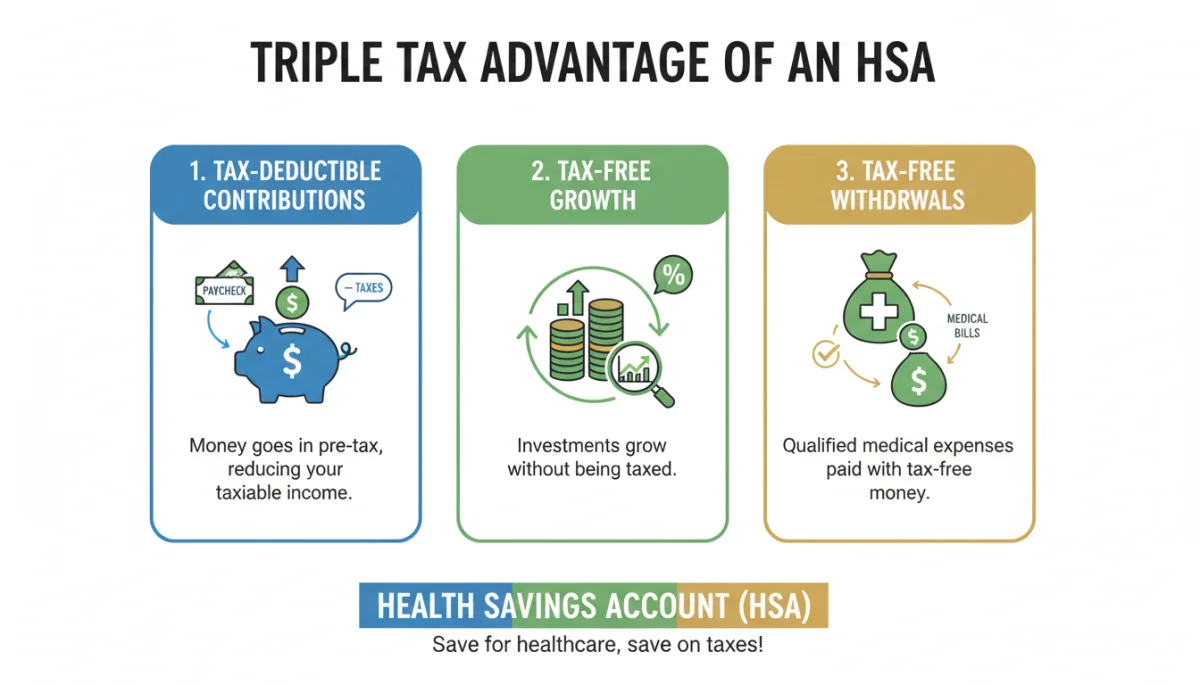
By allowing your HSA funds to grow tax-free, you’re essentially compounding your savings, creating a powerful engine for wealth accumulation. This is particularly beneficial for retirement, as healthcare costs often increase significantly in later life. An invested HSA can act as a supplementary retirement account, specifically earmarked for medical expenses, providing peace of mind for your family’s future health needs. Remember, the earlier you start investing your HSA, the more time your money has to grow.
Strategic HSA Usage for Family Healthcare Needs
Beyond simply contributing and investing, strategic utilization of your HSA is crucial for maximizing its benefits for your family. This involves making informed decisions about when and how to use your HSA funds, considering both immediate needs and long-term financial goals. A well-thought-out strategy can optimize your tax advantages and ensure you have funds available when your family needs them most.
One powerful strategy is to pay for current medical expenses out-of-pocket, if financially feasible, and let your HSA funds continue to grow untouched. You can then reimburse yourself for these qualified expenses at any point in the future, even years later, tax-free. This allows your invested HSA to compound for a longer period, significantly increasing its value. This approach requires meticulous record-keeping of all eligible out-of-pocket medical expenses.
Optimizing Your Family’s HSA Strategy
- Pay Out-of-Pocket, Reimburse Later: If your budget allows, cover current medical costs with non-HSA funds. Keep detailed records and reimburse yourself years down the line, allowing your HSA to grow.
- Plan for Significant Expenses: Anticipate major family medical expenses, such as orthodontics, surgeries, or chronic condition management, and ensure your HSA is adequately funded.
- Use for Retirement Healthcare: Recognize that an HSA can serve as a powerful retirement healthcare savings vehicle. The funds can cover Medicare premiums, deductibles, co-pays, and other qualified expenses in retirement.
Another strategic consideration for families is leveraging the HSA for dependents. As long as your dependents meet the IRS definition, their medical expenses can be paid for with your HSA funds, regardless of whether they are covered under your HDHP. This provides considerable flexibility for families with adult children who may still be dependents for tax purposes but have their own health coverage. Thinking long-term about your family’s health trajectory and financial capacity will help you craft the most effective HSA strategy.
Navigating Tax Advantages and Reporting for 2026
The tax advantages of an HSA are a cornerstone of its appeal, offering a unique “triple tax benefit.” Contributions are tax-deductible, reducing your taxable income in the year you contribute. Earnings on investments within the HSA grow tax-free. Finally, qualified withdrawals for medical expenses are also tax-free. Understanding these benefits and the associated reporting requirements for 2026 is essential for compliance and maximizing your savings.
When you contribute to an HSA, either directly or through payroll deductions, those contributions are generally tax-deductible. If your employer contributes, those contributions are typically excluded from your gross income. This immediate tax break can significantly reduce your current year’s tax liability, making the HSA an attractive option for tax planning. For families, this can translate to substantial annual savings.
Key Tax Considerations and Reporting
- Form 8889: This IRS form is crucial for reporting all HSA activity, including contributions, distributions, and any employer contributions. You’ll file this with your annual tax return.
- Contribution Deadline: Contributions for a given tax year can typically be made up until the tax filing deadline of the following year (e.g., April 15, 2027, for 2026 contributions).
- Non-Qualified Withdrawals: Withdrawing funds for non-qualified expenses before age 65 incurs income tax and a 20% penalty. After age 65, non-qualified withdrawals are taxed as ordinary income but without the penalty.
Accurate reporting of your HSA activities to the IRS is critical. Your HSA administrator will typically send you Form 1099-SA for distributions and Form 5498-SA for contributions. These forms summarize your annual HSA activity and are necessary for completing Form 8889 correctly. Maintaining good records of all contributions and especially withdrawals for qualified medical expenses is paramount to avoid issues during tax season. Consulting a tax professional is always recommended to ensure full compliance and to leverage all available tax benefits for your family’s HSA in 2026.
Future-Proofing Your Family’s Health with an HSA
Looking beyond immediate healthcare needs, an HSA serves as an excellent tool for future-proofing your family’s health and financial well-being. The long-term growth potential, coupled with its tax advantages, positions the HSA as a critical component of any comprehensive financial plan. As healthcare costs continue to rise, having a robust HSA can provide a significant buffer against unexpected expenses and planned future needs, especially as your family members age.
One of the most powerful long-term benefits of an HSA is its role in retirement planning. After age 65, the funds in your HSA can be withdrawn for any purpose without the 20% penalty, though non-qualified withdrawals will be subject to ordinary income tax. This means your HSA essentially functions like a traditional IRA or 401(k) in retirement, but with the added benefit of tax-free withdrawals for qualified medical expenses. This flexibility makes it a uniquely valuable asset in your retirement portfolio.
Long-Term Benefits of a Well-Managed HSA
- Retirement Healthcare Funding: Cover Medicare premiums, deductibles, co-pays, and other medical costs in retirement, which can be substantial.
- Legacy Planning: HSAs can be passed on to beneficiaries. A spouse can inherit the HSA tax-free, maintaining its tax-advantaged status.
- Emergency Fund for Health: Provides a dedicated fund for unexpected health crises, protecting other savings from being depleted.
By consistently contributing the maximum allowable amounts, investing wisely, and strategically managing withdrawals, your family can build a substantial HSA balance that will provide financial security for decades to come. This proactive approach to health savings ensures that your family is well-prepared for the evolving landscape of healthcare costs, allowing you to focus on well-being rather than financial strain. The HSA is truly a powerful vehicle for securing a healthier and more financially stable future for your family.
| Key Aspect | Brief Description |
|---|---|
| Eligibility | Must be enrolled in a High-Deductible Health Plan (HDHP) and not have other disqualifying coverage. |
| Contribution Limits | Annual IRS-set maximums for families, plus catch-up contributions for those 55+. |
| Triple Tax Advantage | Tax-deductible contributions, tax-free growth, and tax-free qualified withdrawals. |
| Investment Potential | Unused funds can be invested and grow tax-free, serving as a long-term healthcare savings vehicle. |
Frequently Asked Questions About Family HSAs in 2026
The IRS typically releases official contribution limits for the upcoming year in the fall of the preceding year. While specific 2026 figures are not yet finalized, they are expected to be higher than 2025 limits due to inflation adjustments. It’s crucial to consult official IRS guidance for the most accurate information.
If both spouses are eligible for an HSA and are covered under a family HDHP, they can each open their own HSA. However, the combined contributions from both spouses (and any employer contributions) cannot exceed the annual family contribution limit set by the IRS.
Your HSA funds are yours to keep, even if you change employers, health plans, or retire. HSAs are portable. You can continue to use the funds for qualified medical expenses, but you can only contribute if you remain eligible through an HDHP.
Yes, under current regulations, many over-the-counter (OTC) medications and products, such as pain relievers, cold medicines, and feminine hygiene products, are considered eligible medical expenses and can be purchased with HSA funds without a prescription.
An HSA acts as a powerful retirement savings vehicle. After age 65, funds can be withdrawn for any purpose without penalty, functioning like a traditional IRA. For qualified medical expenses, withdrawals remain tax-free, making it an excellent way to cover rising healthcare costs in retirement.
Conclusion
Maximizing Your Family’s Health Savings Account (HSA) in 2026: A US-Specific Guide reveals that an HSA is an indispensable financial tool for American families navigating the complexities of healthcare costs. By understanding eligibility, optimizing contributions, strategically investing, and meticulously tracking eligible expenses, families can harness the triple tax advantage to build a robust fund for both immediate and future medical needs. The HSA’s unique ability to grow tax-free and provide tax-free withdrawals for qualified expenses makes it a cornerstone of smart financial and health planning, offering peace of mind and significant savings for years to come.
