New Homeowner Assistance Programs 2026: Up to $25,000 Aid

New Homeowner Assistance Programs 2026 will provide up to $25,000 in down payment and closing cost aid, significantly easing the path to homeownership.
Embarking on the journey to homeownership can feel daunting, especially with rising costs. However, exciting developments are on the horizon with the New Homeowner Assistance Programs 2026: Up to $25,000 in Down Payment and Closing Cost Aid, designed to make your dream home a tangible reality. This article will guide you through the upcoming opportunities, helping you understand how these vital programs can pave your way to owning a home.
Understanding the Landscape of Homebuyer Assistance in 2026
As we approach 2026, the housing market continues to evolve, bringing both challenges and new opportunities for prospective homeowners. Financial barriers, particularly down payments and closing costs, often remain the largest hurdles. Thankfully, federal, state, and local governments, alongside non-profit organizations, are continually developing programs to mitigate these obstacles, making homeownership more accessible to a broader demographic.
The focus for 2026 is squarely on expanding access, with particular attention paid to first-time homebuyers, low-to-moderate income individuals, and underserved communities. These new initiatives aim to inject significant capital into the market, directly assisting those who need it most. Understanding the various types of aid available is the first crucial step in navigating this complex landscape.
Federal Initiatives and Their Impact
Federal programs form the backbone of homeowner assistance in the United States. Agencies like the Department of Housing and Urban Development (HUD) and the Federal Housing Administration (FHA) play pivotal roles. In 2026, we anticipate enhanced funding and streamlined application processes for existing programs, alongside the introduction of new pilot initiatives.
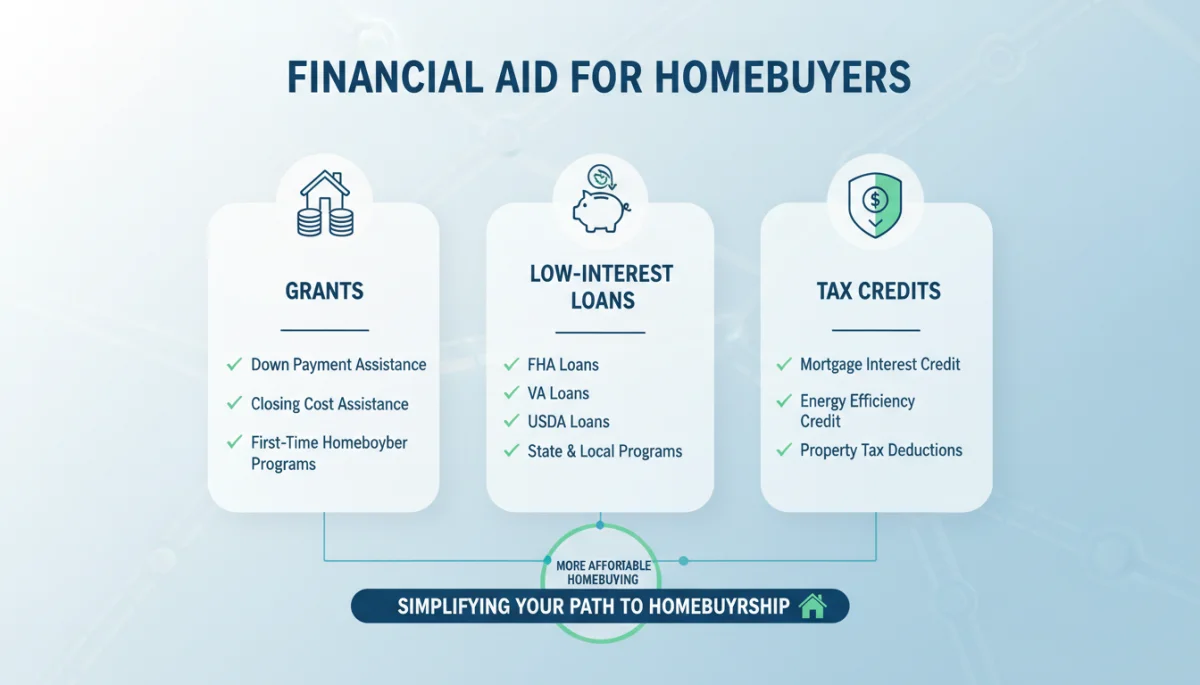
- FHA Loans: These continue to be a cornerstone, offering lower down payment requirements and more lenient credit score criteria compared to conventional loans.
- VA Loans: For eligible veterans and active-duty service members, VA loans provide zero down payment options and competitive interest rates, a benefit that remains invaluable.
- USDA Loans: Aimed at rural and suburban areas, these loans often require no down payment, promoting development in less densely populated regions.
These federal programs frequently serve as a foundation upon which state and local assistance can be layered, maximizing the financial support available to homebuyers. Staying informed about legislative changes and new allocations will be key for those planning to purchase a home in 2026.
Decoding the $25,000 Down Payment and Closing Cost Aid
The prospect of receiving up to $25,000 in aid for down payments and closing costs is a game-changer for many aspiring homeowners. This significant figure represents a substantial reduction in the upfront financial burden, which traditionally deters a large segment of the population from purchasing a home. This aid is not a one-size-fits-all solution but rather a combination of various program types designed to address different needs.
Such aid can come in the form of grants, forgivable loans, or deferred payment loans. Grants are typically the most sought-after as they do not need to be repaid. Forgivable loans, on the other hand, are repaid only under certain conditions, such as selling the home within a specific timeframe or refinancing. Deferred payment loans postpone repayment until the sale or refinance of the home, or until the mortgage is paid off.
Eligibility Criteria and Application Process
While the specifics will vary by program and location, common eligibility criteria often include:
- First-Time Homebuyer Status: Many programs prioritize individuals who have not owned a home in the past three years.
- Income Limitations: Applicants typically need to fall within a certain income bracket, usually a percentage of the Area Median Income (AMI).
- Credit Score Requirements: While some programs are more flexible, a reasonable credit score is often necessary to qualify for the underlying mortgage.
- Property Type and Location: Some aid is specific to certain types of properties or geographical areas.
The application process usually involves working with an approved lender or housing counseling agency. It’s crucial to gather all necessary financial documents, including income statements, tax returns, and asset information, to ensure a smooth application. Consulting with a housing counselor can provide invaluable guidance through this intricate process.
State and Local Programs: A Closer Look at Regional Opportunities
Beyond federal initiatives, state and local governments, along with various housing authorities, offer a plethora of assistance programs tailored to their specific communities. These programs often complement federal aid, providing additional layers of financial support that can make a profound difference in a homebuyer’s overall financial picture. Understanding these regional opportunities is vital for maximizing available benefits.
Many states operate housing finance agencies (HFAs) that issue bonds to fund affordable housing programs. These HFAs often provide down payment assistance, closing cost assistance, and even favorable mortgage rates. Cities and counties also frequently have their own programs, sometimes funded through community development block grants or local housing trust funds. These local programs are particularly effective because they are designed with the unique economic and social needs of their specific populations in mind.
Exploring Diverse Aid Options
The types of aid available at the state and local levels are diverse. They can range from outright grants that never need to be repaid to deferred second mortgages that only become due when the home is sold or refinanced. Some programs might offer interest-free loans, while others could provide tax credits that reduce a homebuyer’s federal tax liability.
- First-Time Homebuyer Programs: Many states have specific initiatives aimed at helping first-time buyers overcome initial financial barriers.
- Teacher and Public Service Programs: Certain regions offer specialized assistance for educators, first responders, and other public service professionals as a way to support essential community members.
- Neighborhood Revitalization Initiatives: Some local programs focus on specific areas, encouraging homeownership to revitalize struggling neighborhoods.
It is highly recommended that prospective homebuyers research the specific programs available in their target area. Websites of state housing finance agencies, local city halls, and non-profit housing counseling organizations are excellent starting points for this research. These resources often provide detailed information on eligibility, application processes, and available funding.
Navigating the Application Process and Maximizing Your Aid
The journey to securing homeowner assistance, while rewarding, requires careful planning and attention to detail. The application process can be intricate, involving multiple steps and various documentation requirements. Understanding how to navigate this process effectively is crucial for maximizing your chances of receiving the aid you qualify for, particularly for the Homeowner Assistance Programs 2026.
One of the first steps is to get pre-approved for a mortgage. This not only gives you a clear idea of how much home you can afford but also signals to assistance programs that you are a serious and qualified buyer. Next, identify the specific programs that align with your financial situation and homeownership goals. Many programs have limited funding, so applying early once cycles open can be advantageous. Be prepared to provide extensive documentation, including pay stubs, bank statements, tax returns, and asset information, to ensure a smooth application. Consulting with a housing counselor can provide invaluable guidance through this intricate process.
Essential Steps for a Smooth Application
To ensure a successful application, consider these key actions:
- Credit Health: Review your credit report well in advance to identify and rectify any discrepancies. A strong credit score can open doors to more favorable loan terms and assistance programs.
- Financial Education: Many programs require or recommend completing a homebuyer education course. These courses provide valuable insights into the responsibilities of homeownership and the financial aspects of purchasing a home.
- Professional Guidance: Work closely with a HUD-approved housing counselor or an experienced loan officer specializing in assistance programs. Their expertise can be invaluable in identifying eligible programs and guiding you through the paperwork.
Remember that some programs can be stacked, meaning you might be able to combine aid from different sources (e.g., a state down payment assistance program with a federal FHA loan). Inquiring about such possibilities with your loan officer or housing counselor can significantly increase your total aid package, potentially reaching or exceeding the $25,000 threshold.
Future Outlook: What to Expect from Homeowner Assistance in 2026 and Beyond
The landscape of homeowner assistance is continuously evolving, driven by economic shifts, legislative priorities, and the ongoing demand for affordable housing. Looking towards 2026 and beyond, we can anticipate several key trends and developments in these vital programs. The overarching goal will remain to make homeownership a reality for more Americans, especially in a market that continues to present challenges for many.
One significant trend expected is an increased emphasis on sustainable homeownership. This includes programs that not only help with initial purchase costs but also provide resources for home maintenance, energy efficiency upgrades, and financial literacy to ensure long-term success. There will likely be a greater integration of technology in the application and management of these programs, simplifying processes for both applicants and administrators.
Anticipated Program Enhancements and Innovations
We can also expect to see innovations in how assistance is structured. This might include more flexible income requirements that account for regional cost-of-living differences, or programs specifically targeting essential workers and those in high-demand professions. There is also a growing interest in expanding aid to include manufactured homes and other alternative housing solutions, broadening the scope of what qualifies for assistance.
- Digital Accessibility: Expect more online portals and digital tools to streamline applications and provide real-time updates on program status.
- Targeted Support: Programs may become even more specialized, focusing on specific demographics or housing needs within communities.
- Financial Wellness: A stronger link between homebuyer education and ongoing financial counseling to support homeowners throughout their mortgage term.
Staying abreast of these changes will be crucial for prospective homebuyers. Government websites, housing advocacy groups, and financial news outlets will be important resources for the latest information on these evolving programs. The commitment to supporting homeownership remains strong, and 2026 promises to bring even more robust and accessible aid options.
Common Misconceptions About Homeowner Assistance Programs
Despite the widespread availability and significant benefits of homeowner assistance programs, many prospective buyers harbor misconceptions that can prevent them from exploring these valuable resources. Dispelling these myths is crucial to ensuring that individuals do not miss out on opportunities to achieve homeownership. Understanding the truth behind these programs is the first step toward leveraging them effectively.
One common misconception is that these programs are only for individuals with very low incomes. While many programs do have income limits, these limits are often set higher than people assume, often encompassing moderate-income households. Another myth is that applying for assistance is overly complicated or time-consuming. While it does require diligence, many resources, such as housing counselors, are available to simplify the process.
Addressing Key Misunderstandings
Let’s clarify some frequent misunderstandings:
- “Programs are only for first-time buyers”: While many prioritize first-timers, some programs are open to repeat buyers, especially if they are purchasing in a designated revitalization area or have not owned a home in several years.
- “Assistance is a loan that must be repaid with interest”: Not all aid is a loan. Many programs offer grants that do not require repayment, and even loans can be forgivable or deferred, significantly easing the financial burden.
- “There aren’t enough programs available”: The reality is that there are thousands of federal, state, and local programs. The challenge is often finding the right ones for your specific situation, which is where research and expert guidance become invaluable.
It’s also a common belief that receiving assistance means you’ll be limited to purchasing a less desirable home. This is often not true. While some programs may have property eligibility requirements, these are usually broad and designed to ensure the home is safe and sound, not to restrict choices to only undesirable properties. By debunking these myths, more individuals can confidently explore the genuine benefits offered by homeowner assistance programs.
Preparing for Your Homeownership Journey in 2026
As you look ahead to 2026 and the exciting possibilities offered by the new homeowner assistance programs, proactive preparation is your most powerful tool. The journey to homeownership is a significant financial and personal undertaking, and being well-prepared can make all the difference in securing the best possible outcome. This readiness involves not just financial planning but also understanding the market and your personal readiness.
Begin by assessing your current financial health. This includes reviewing your budget, understanding your monthly expenses, and identifying areas where you can save. Building a solid emergency fund is also critical, as unexpected costs can arise during the homebuying process and after you move in. The more financially stable you are, the more attractive you will appear to lenders and assistance programs, further enhancing your eligibility for programs like the Homeowner Assistance Programs 2026.
Key Preparatory Steps
Consider these essential steps to set yourself up for success:
- Credit Score Improvement: Dedicate time to improving your credit score. Pay bills on time, reduce credit card debt, and avoid opening new lines of credit. A higher score can lead to better interest rates and more program options.
- Savings Strategy: Even with significant assistance, having some personal savings for a down payment, closing costs, or immediate home repairs is always beneficial. Set realistic savings goals and stick to them.
- Market Research: Research the housing market in your desired areas. Understand average home prices, property taxes, and the availability of homes that meet your needs. This knowledge will help you set realistic expectations.
Engaging with real estate professionals, such as real estate agents and mortgage brokers who specialize in first-time homebuyers and assistance programs, can provide invaluable insights and guidance. These professionals can help you navigate the complexities of the market, identify suitable properties, and connect you with the right financial resources. With thorough preparation, you can confidently approach 2026, ready to seize the opportunities that await you in your quest for homeownership.
| Key Program Feature | Brief Description |
|---|---|
| Up to $25,000 Aid | Significant financial support for down payments and closing costs, reducing upfront expenses. |
| Diverse Program Types | Includes grants, forgivable loans, and deferred payment loans from various sources. |
| Federal, State, Local Support | Assistance available from multiple government levels and non-profits, often stackable. |
| Targeted Eligibility | Aimed at first-time homebuyers, low-to-moderate income, and specific community needs. |
Frequently Asked Questions About 2026 Homeowner Aid
Eligibility typically targets first-time homebuyers, individuals within specific income brackets, and those purchasing in designated areas. Requirements vary by program, so checking local and federal guidelines is crucial. Some programs also support repeat buyers under certain conditions.
The $25,000 aid is often a combination of federal, state, and local programs, including grants, forgivable loans, and deferred payment assistance. It’s essential to research and apply for multiple programs you qualify for to maximize your total aid package.
While most programs are broadly applicable to various home types, some may have specific criteria. For instance, certain local initiatives might focus on revitalizing particular neighborhoods or supporting energy-efficient homes. Always verify property eligibility with program administrators.
A grant is financial aid that does not need to be repaid. A forgivable loan, however, is a loan that is forgiven (does not need to be repaid) if certain conditions are met, such as living in the home for a specific number of years.
You can find information on local assistance programs through your state’s Housing Finance Agency (HFA), local city or county housing departments, and HUD-approved housing counseling agencies. These resources often provide comprehensive lists and guidance.
Conclusion
The **New Homeowner Assistance Programs 2026: Up to $25,000 in Down Payment and Closing Cost Aid** represent a significant opportunity for aspiring homeowners across the United States. By understanding the various federal, state, and local initiatives, diligently preparing your finances, and navigating the application process with expert guidance, the dream of owning a home is more attainable than ever. These programs are designed to break down financial barriers, fostering a more inclusive and accessible housing market. Don’t let misconceptions deter you; explore the possibilities and take the proactive steps necessary to secure your place in the vibrant landscape of American homeownership.
